
How do you turn exhibition visitors into outspoken contributors?
And how would such an experience look, feel, and function within the context of a historical exhibition about radio in Austria?
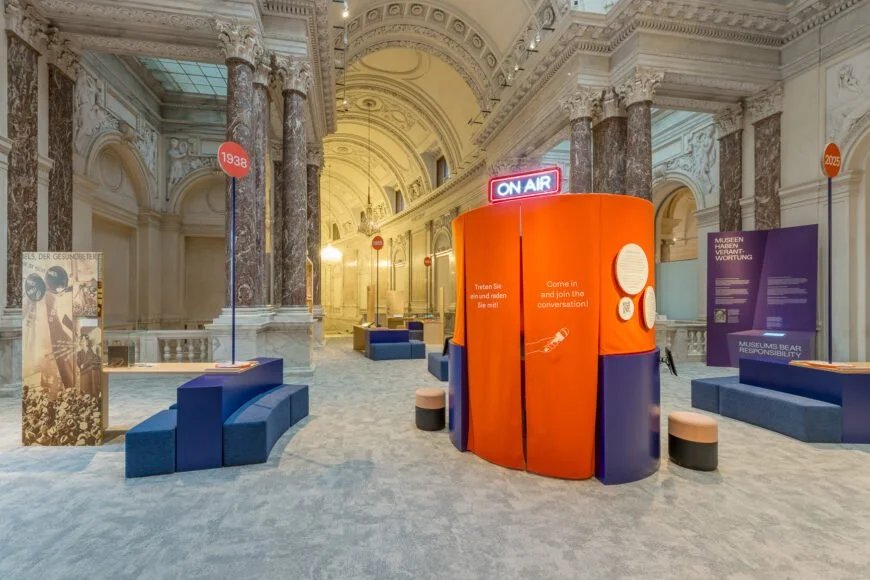
To the point!
Listen and join the conversation
An interactive application that lets exhibition visitors record audio clips as response to burning questions. Transcribing and translating speech in the background, AI helps with overcoming accessibility, language, and editorial difficulties.
Roles: Technical concept, user interface & experience design, project management
-
Idea: Stefan Benedik (hdgö)
Concept: Eva Meran, Lorenz Paulus, Antonia Plessing (hdgö)
Web development: Harald Atteneder (Urban Trout)
Media production: 7reasons
Exhibition management: Anna Bausch (hdgö)
Exhibition photography: Klaus Pichler
-
Exhibition design and graphics: Carol Kofler, Renate Woditschka (Die Ausstellungsmacherinnen)
Display montages, production display: IntoArt
For a complete list, please visit the exhibition page.
Look and feel
Digital experiences in history museums often look a bit antiquated themselves. But must they? Here’s an expressive design that’s fun to use, intriguing to explore, and—most of all—inviting to contribute.
-
![]()
Exhibition design
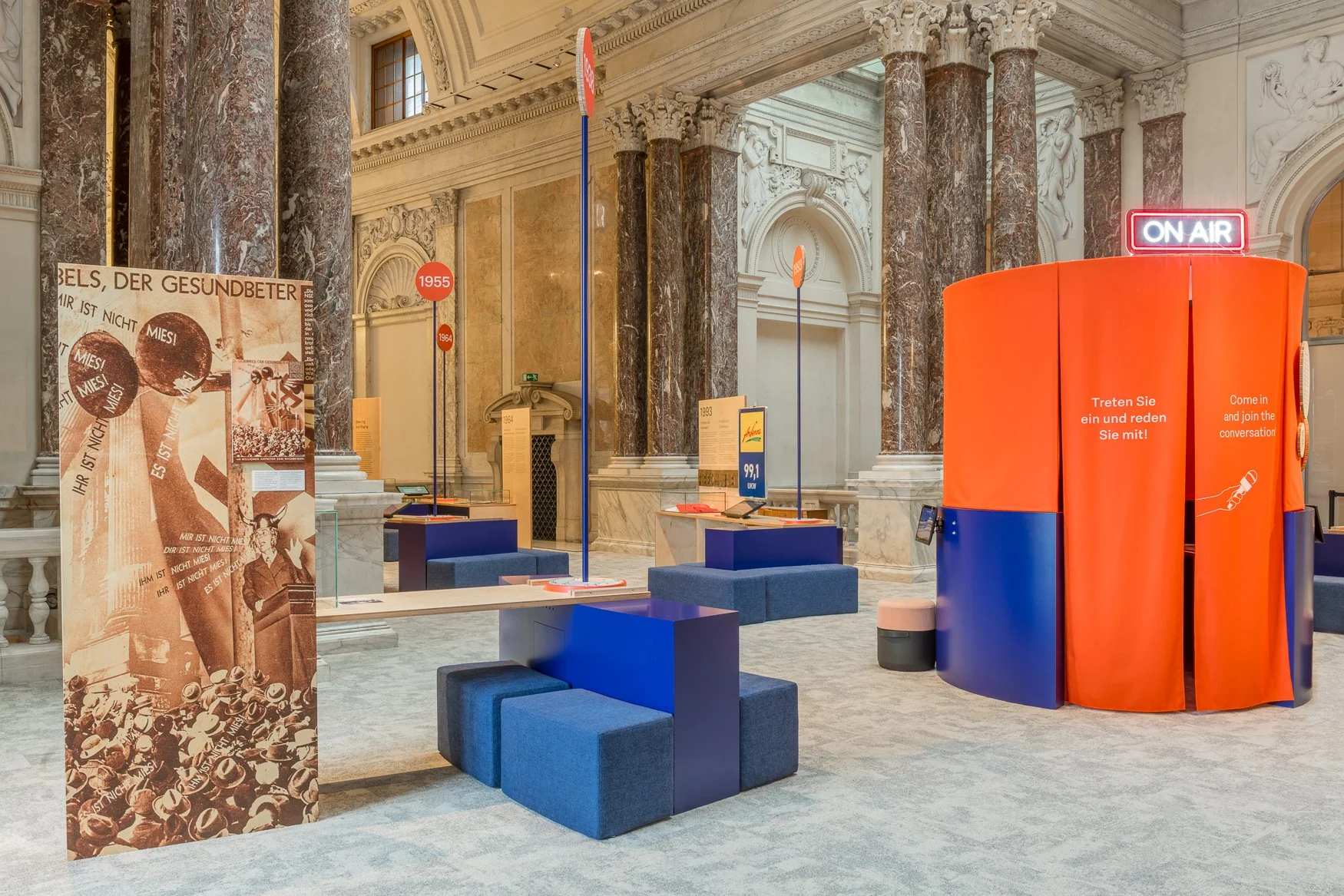
The application feels as a virtual extension to the physical exhibition: Shapes, colors, and icons were highly informed by the overall aesthetic.
-
![]()
Visual metaphors
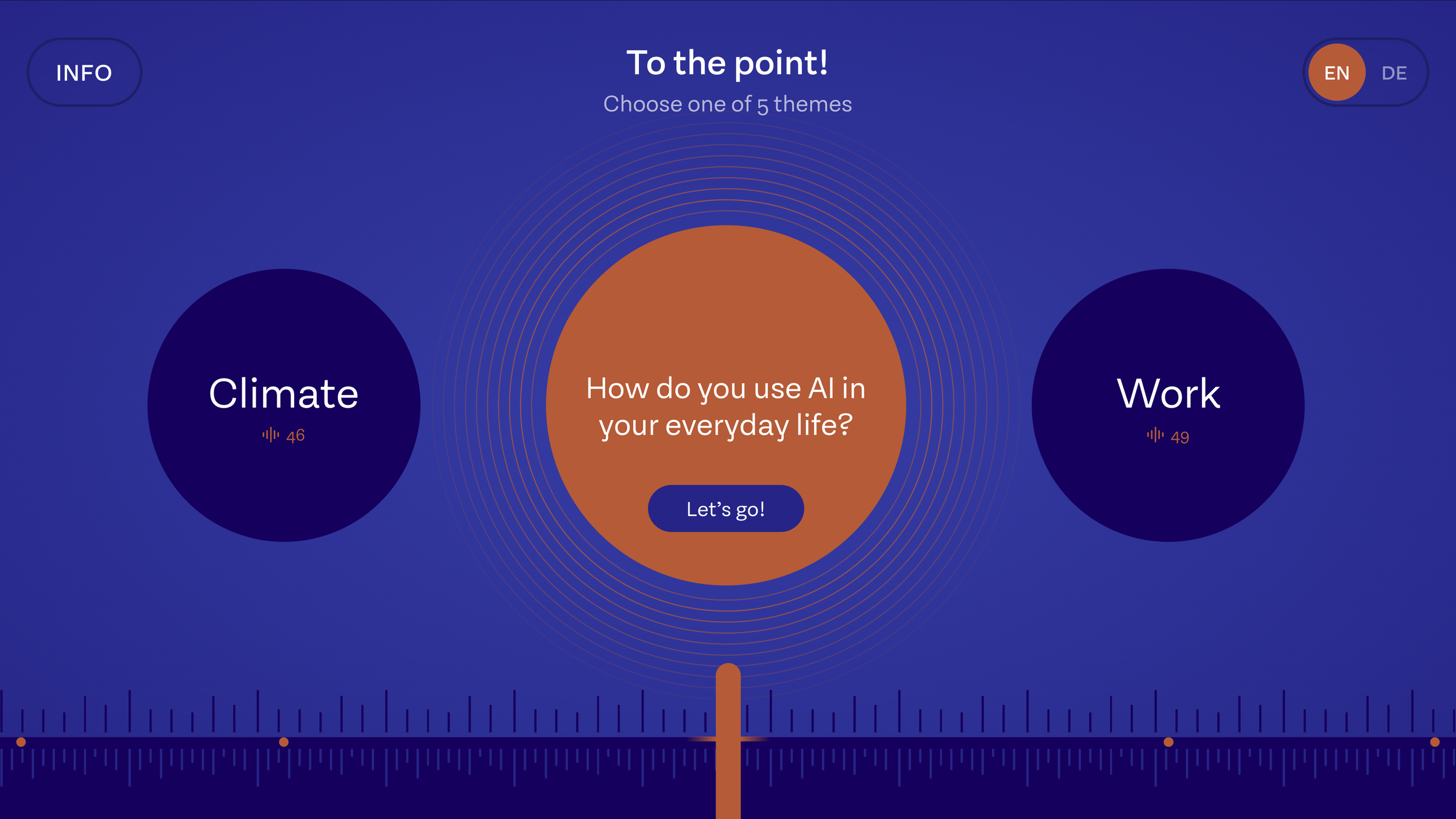
Derived from the application’s title, the point (circle, dot) is representative of the visitor as a sender of signals. Airwaves, frequencies, tuners etc. become visual metaphors in the user’s journey.
-
![]()
Touch first
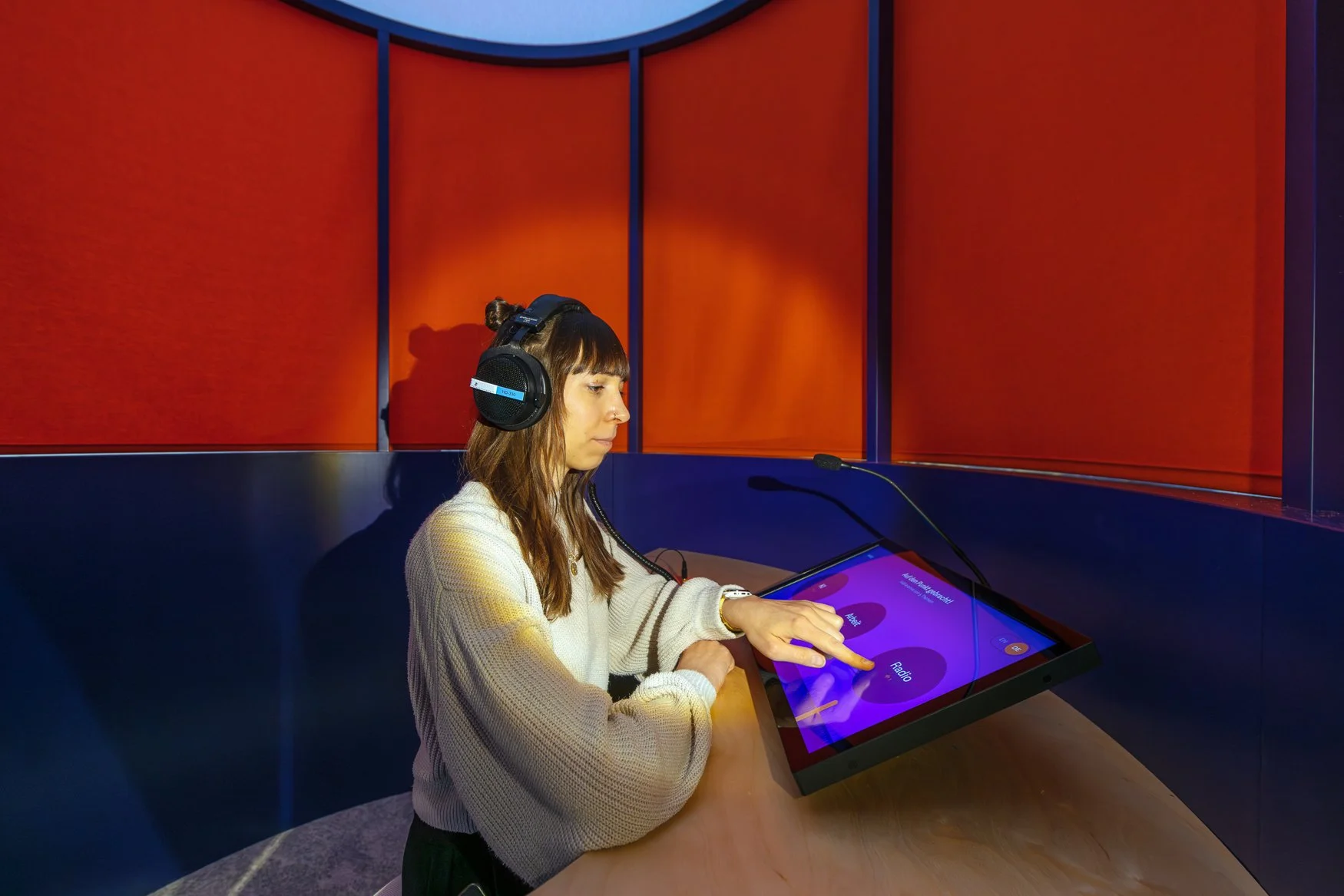
Besides speech, the main interaction by a user with the interface is touch. Buttons are sized appropriately and react responsively to signal system feedback.
-
![]()
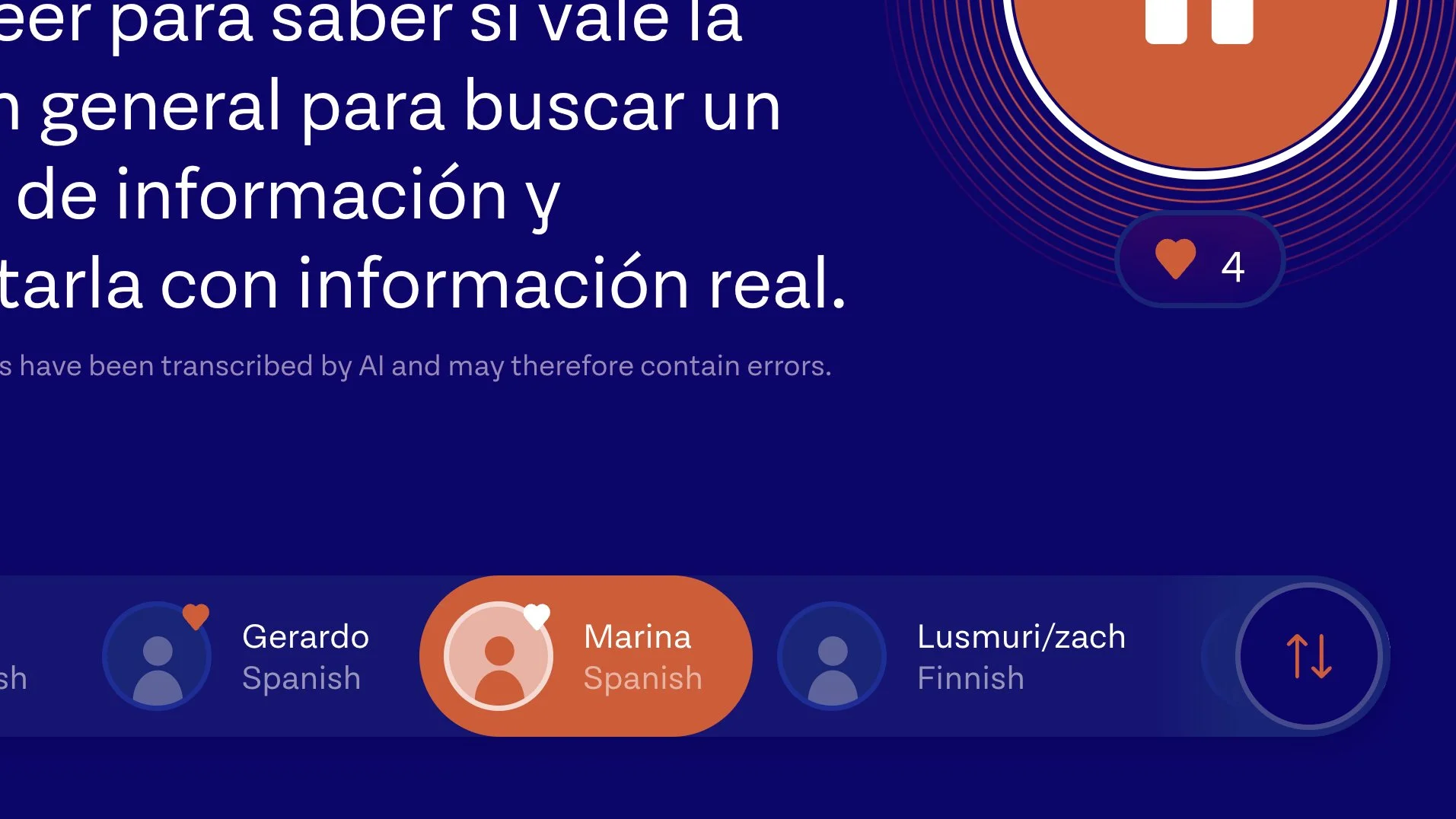
Playful details
Loving an item, for example, adds a little heart-icon to its button in the navigation bar.
DESIGN CHALLENGE #1
Making speaking in public less awkward
Let’s face it: Even in times of AI-powered assistants, talking to a computer can make people feel self-conscious. All the more so in public where others can hear them.
Asking museum visitors for their “voice,” then needs to take place in an environment suitable for such a delicate request. For a couple of reasons:
privacy (create space for sharing opinions without eavesdropping)
sound quality (reduce background noise)
consideration (limit distraction for other visitors)
Solution: Place the action in a recording booth that meets these requirements while attracting attention.
DESIGN CHALLENGE #2
Overcoming language barriers and streamlining editorial work with AI
During early planning, the project team raised an intriguing question:
What if visitors could use their own language rather than being required to choose either German or English—languages they do not know or do not feel comfortable speaking?
It turns out visitors will respond in their favorite language, creating a diverse soundscape of opinions! With translations and transcriptions generated by AI, the application manages to highlight linguistic diversity while still improving on understanding and accessibility. Editorial work is thus limited to observing content guidelines and basic proof reading.
Solution: Use AI for translations and transcriptions to decrease editorial work and increase understanding and accessibility.
The application automatically detects the language spoken and invokes AI translation and transcription in the background; these processes are not visible to the user though. (And yes, I do speak enough Polish to trick the system.)
An audio message originally recorded in Polish with a German translation generated by AI (listen to Piotr’s audio).
An audio message originally recorded in Chinese and transcribed by AI; note the disclaimer at the bottom (listen to Julia’s audio).
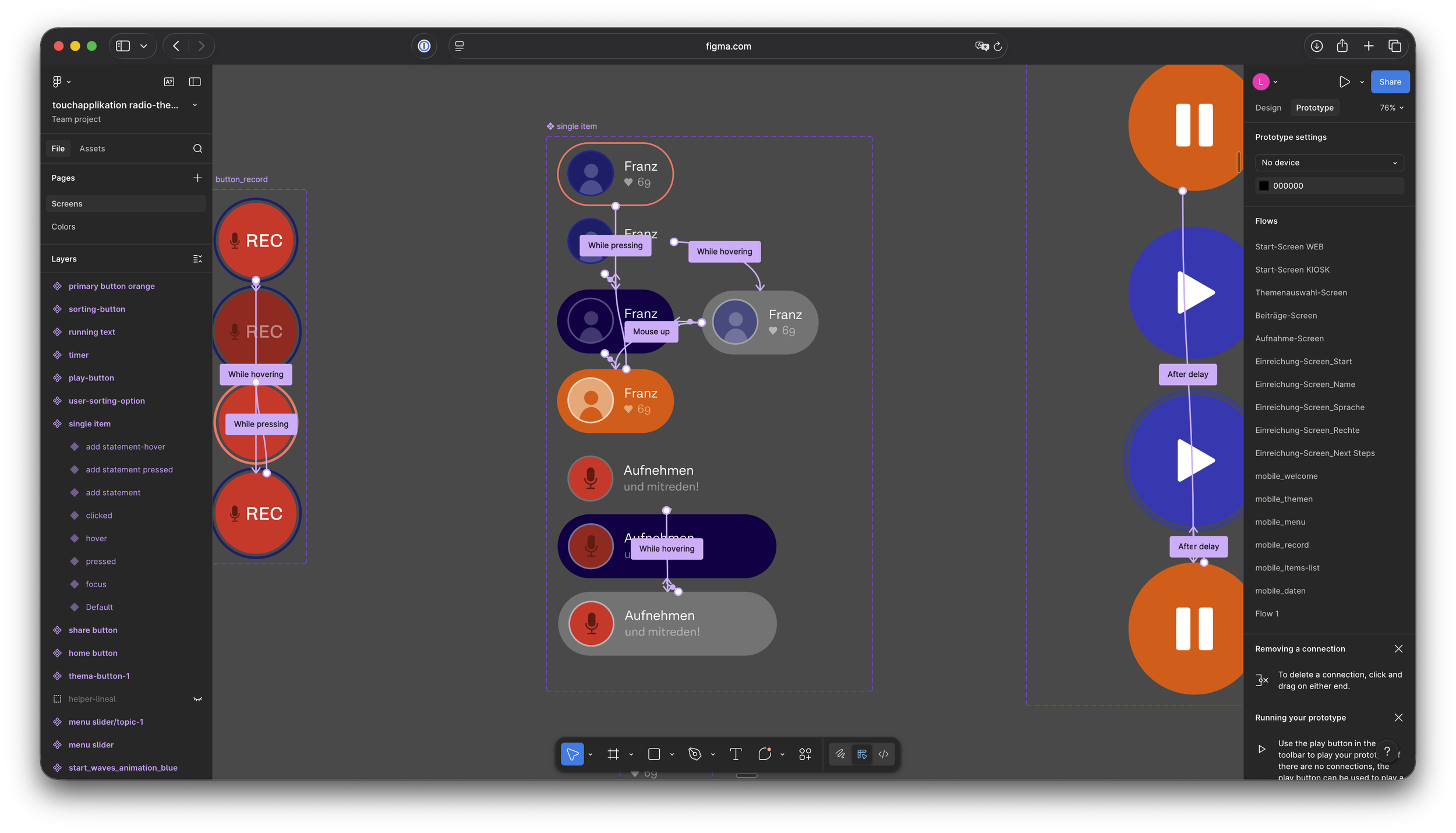
Advanced prototyping and user-testing
The software Figma enabled user-testing with both low- and high-fidelity prototypes in every stage of the design process: from testing basic navigational structures to the vastly more complex interaction of recording speech.
Early proof of concept
Some screens didn’t make it into the final version, others were redesigned, but the basic user-journey was already in place.
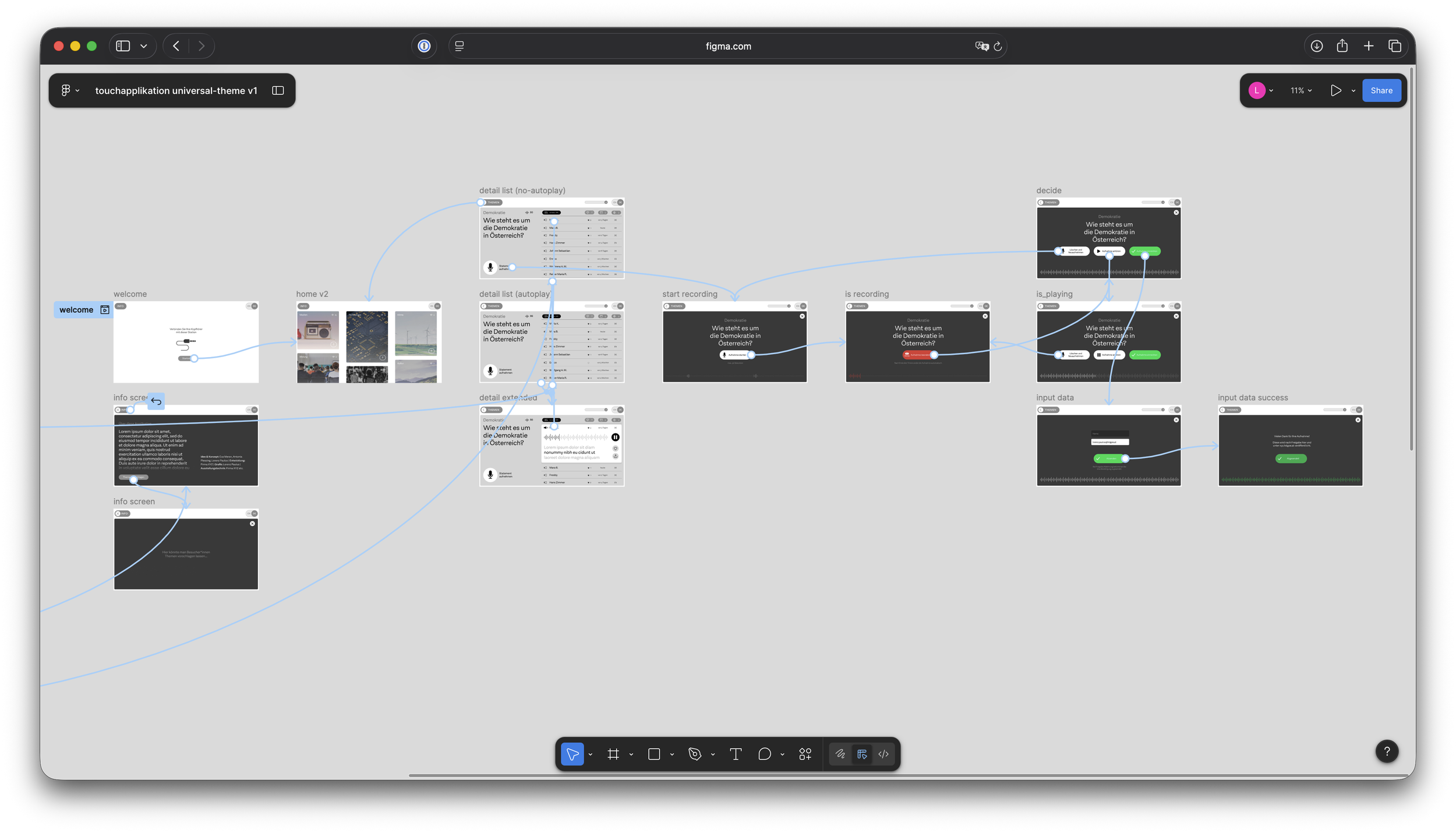
The very first low-fidelity prototype mapped the basic user journey. Even though the design changed substantially until launch, early user-tests had shown basic navigational structures were fully understood.
Recording speech
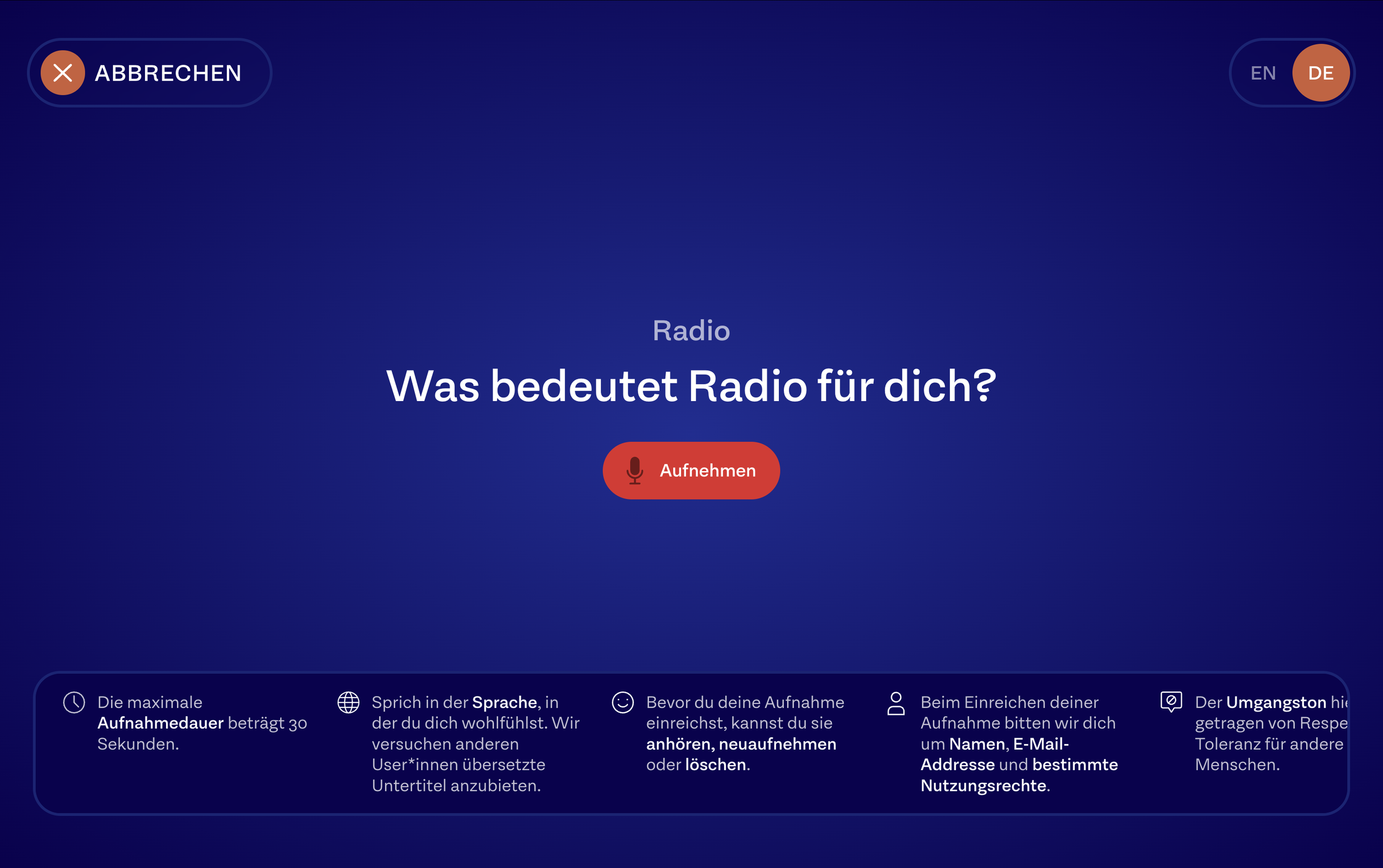
1
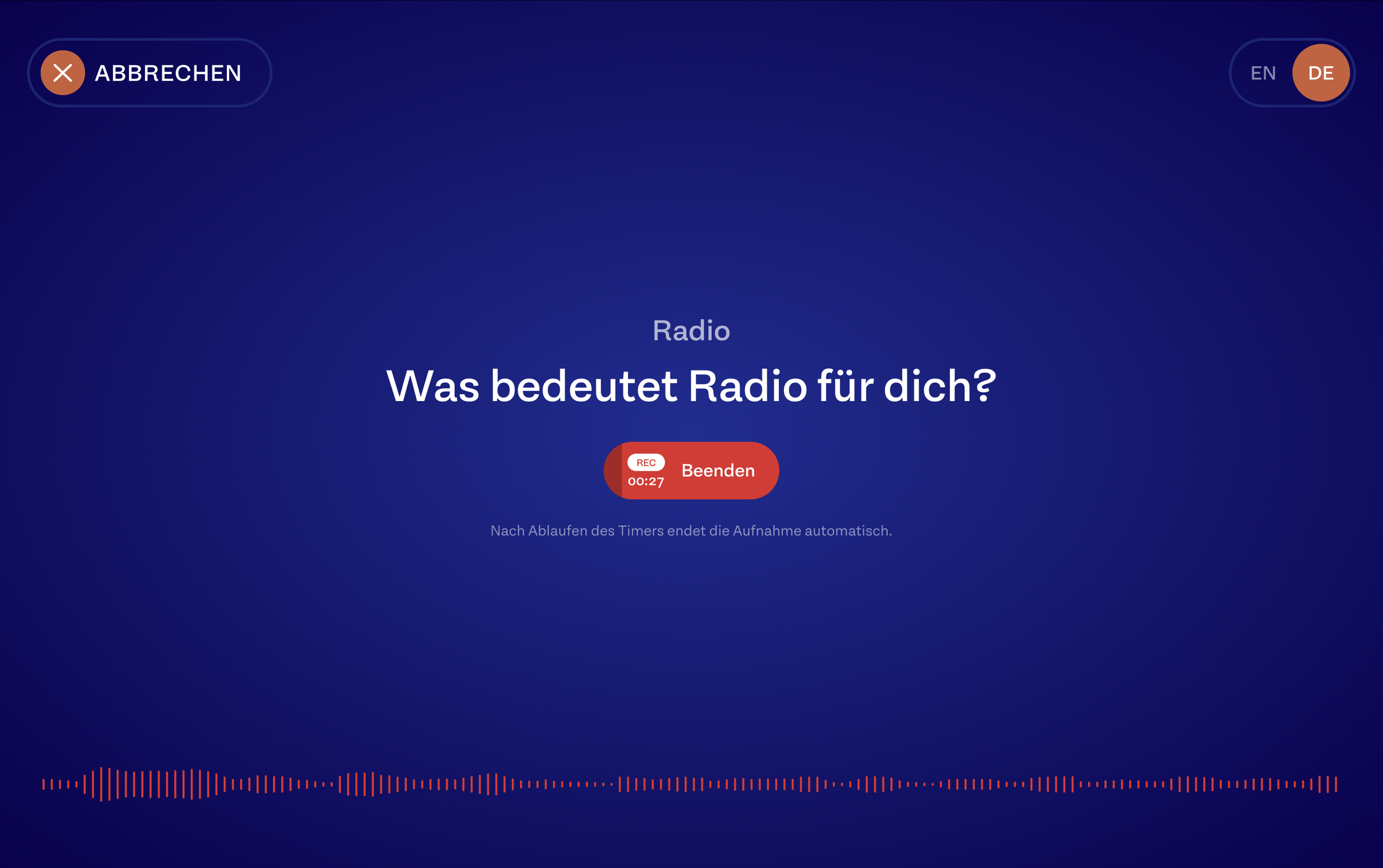
2
Starting the recording immediately after pressing the button seemed to be too rapid. As a result, users wasted precious time realizing recording had already started (note the gap at the beginning of the waveform in step 3).
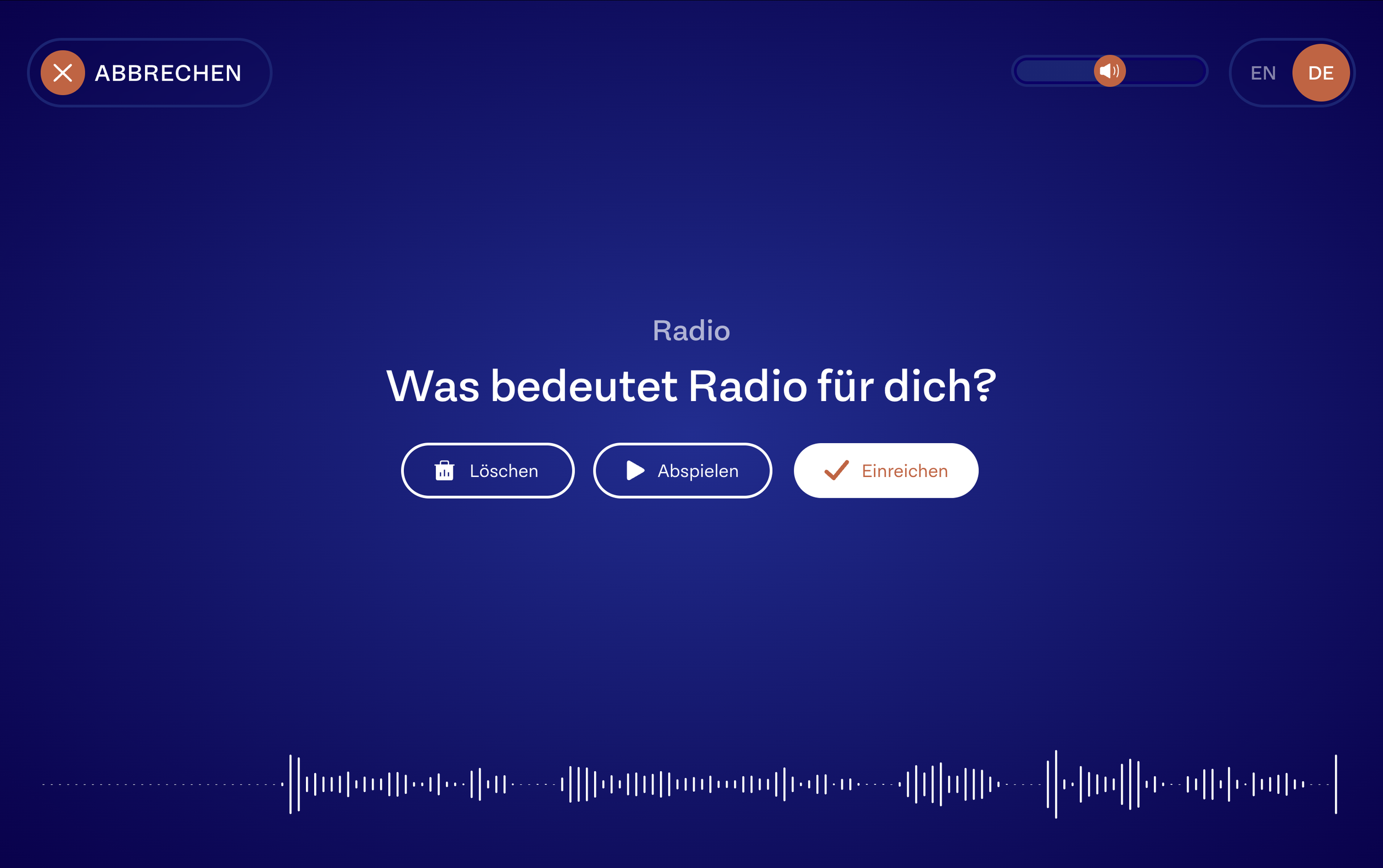
3
Recording speech (revised)
1
NEW
Adding a simple countdown transition after pressing the recording button solved the issue: It clearly signalled to the user the recording was about to start.
2
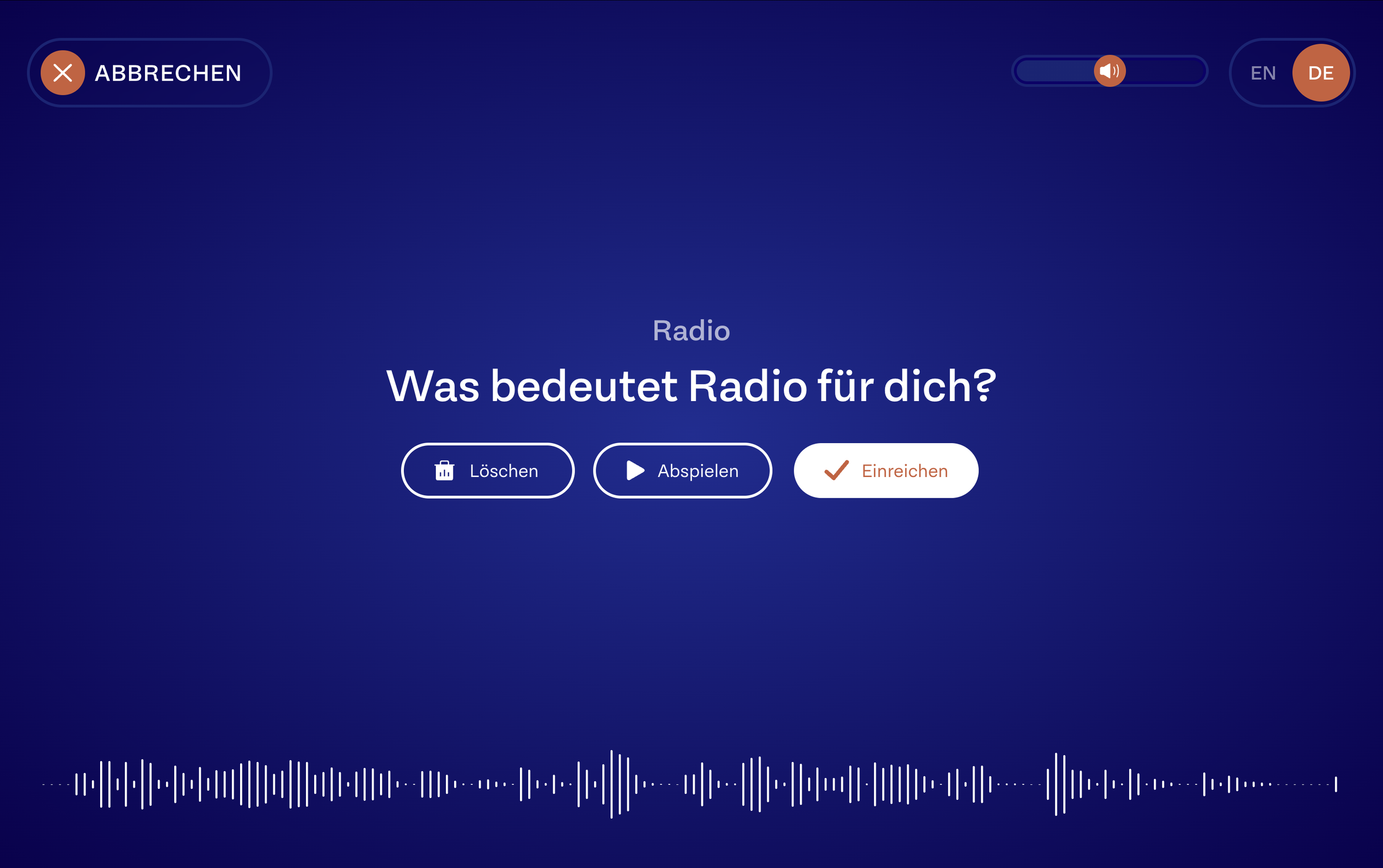
3
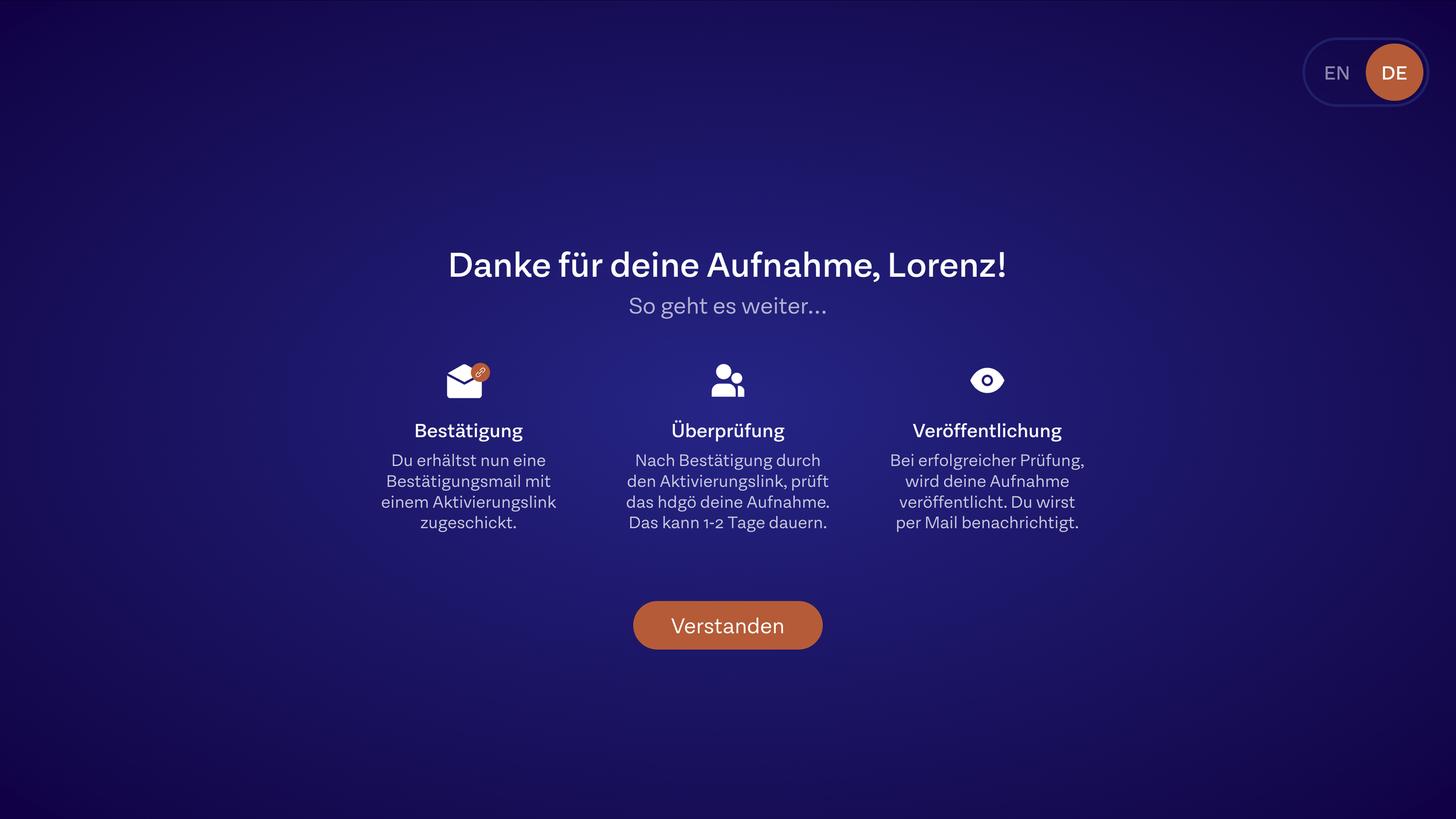
Conclusion
Designing the application and seeing it come to life during development was an amazing experience. The project team rejoiced when the first genuine visitor contributions in languages other than German or English were submitted.
During the exhibition’s run between January 31, 2025 and January 11, 2026 there were:
5
questions asked
19
languages spoken
309
voices recorded